Our Technology
MINEPHOS Technology
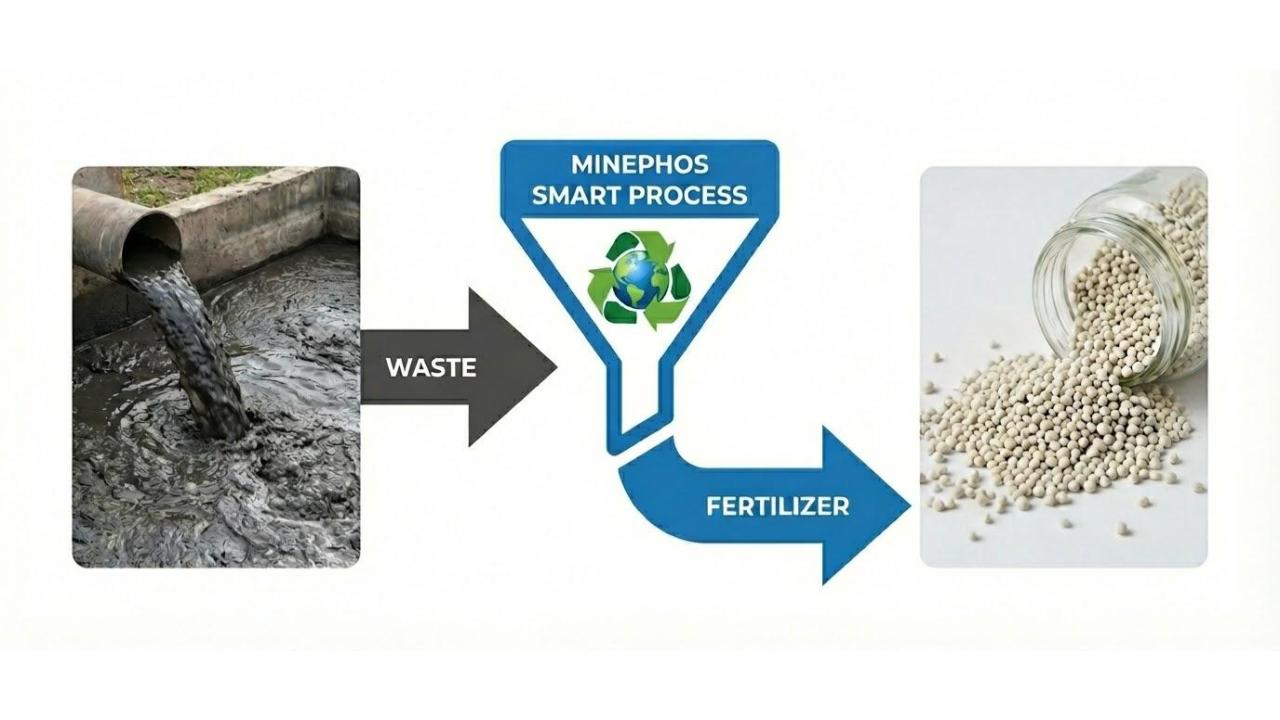
PHOSMAG has developed a technology called MINEPHOS that can selectively extract phosphorus from waste streams in the form of a concentrated valuable fertilizer, free of any contaminants. The technology is capable of treating a wide variety of waste streams such as livestock and poultry manure, sewage sludge, and various industrial wastewater streams.
Our technology is based on a process of phosphorus recovery in the form of struvite which is a valuable slow-release fertilizer that contains 28% of phosphorus (as P₂O₅). Unlike traditional water-soluble fertilizers, struvite is a slow-release fertilizer that prevents the loss of the nutrients in the soil and at the same time provides sufficient nutrition to the plants. The slow-release nature of struvite solves environmental problems such as eutrophication, thus relieving policy and economic pressure regarding environmental impact of agricultural activities and waste management.
How It Works
The process is based on the principle of fluidized bed reactor where phosphorus containing wastewater is injected at the bottom of the reactor and is mixed with precipitating reagents to form struvite. Unique chemical and hydrodynamic conditions in the reactor controlled by a smart process software allow struvite to form into granules which settle down at the bottom and can be easily separated from the wastewater, while the treated effluent exits at the top.
Patent Protection
The technology is currently patented in 7 countries and there are patents pending in 14 more jurisdictions around the world, with a total of 21 jurisdictions.
MINEPHOS Technology Benefits
Able to treat a variety of wastewater streams (sewage, livestock manure, industrial streams)
Able to treat challenging waste streams and extract high quality struvite product
Low capex and opex as compared to other similar technologies
High phosphorus recovery efficiency over 90%
Simple design, small footprint, automated operation, low maintenance
Modular process design and simple scalability
Reducing environmental pollution of water bodies
Reduction in GHG emissions from fertilizer and manure handling